Wine schools: how to truly assess learners’ sales skills
A practical framework for wine schools to assess sales skills with role-play scenarios, scoring rubrics, KPI tracking and a ready-to-use checklist.
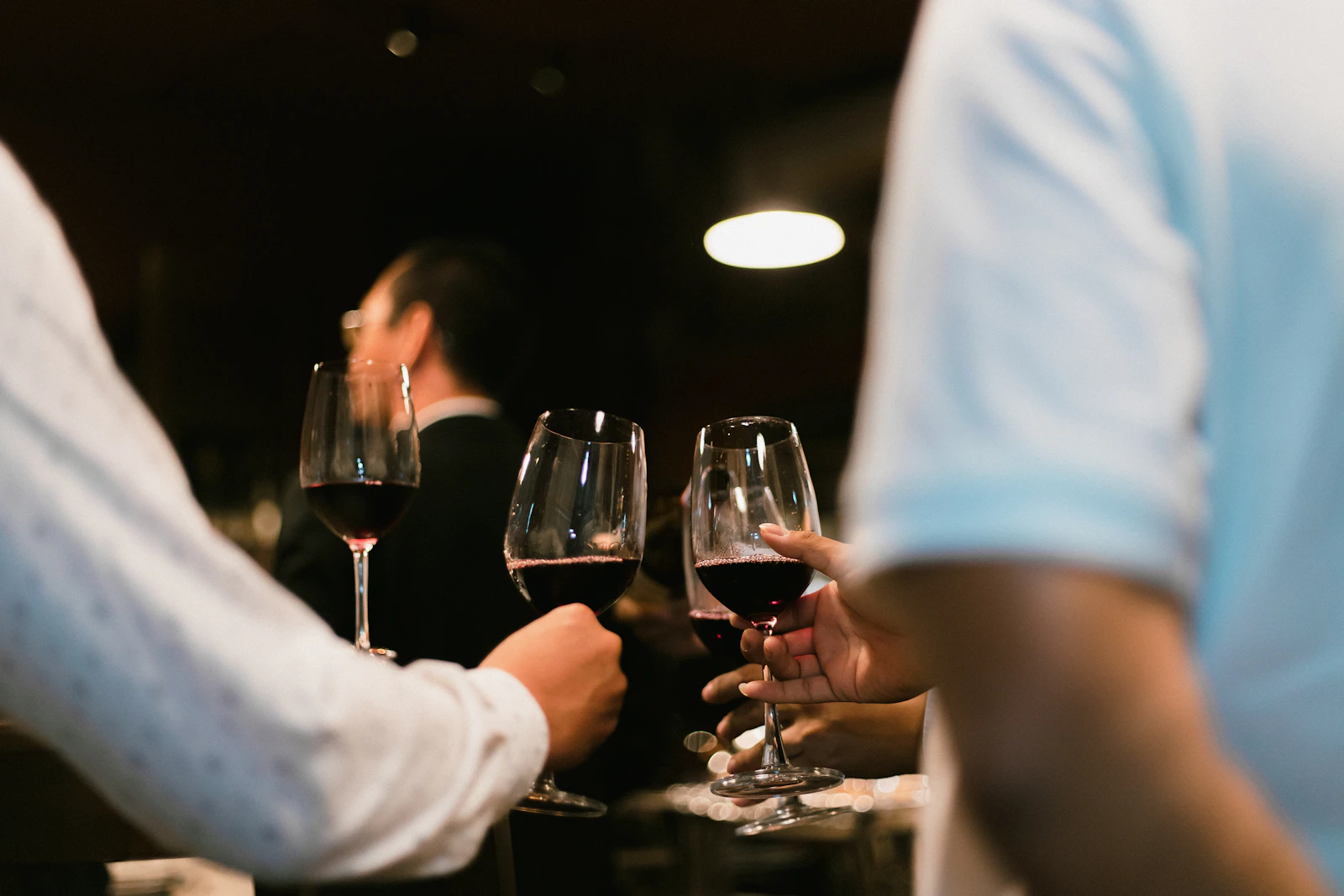
The goal is no longer just to “talk about wine,” but to sell it properly: ask the right questions, frame the need, recommend, handle objections, close, and build loyalty. For a wine school, the challenge is twofold: teach these skills and, above all, assess them in a way that is reliable, repeatable, and useful for both the learner and the employer.
This article offers an operational approach (scenarios, rubrics, KPIs) to move from a “gut-feel” assessment to an observable and quantified one.
1) Start from a clear framework: 6 micro-skills, not one “overall grade”
Assessing “sales” with a single grade creates unfairness (and pedagogical fuzziness). Break it down into observable micro-skills. Here’s a simple framework, usable for wine shops, on-trade (CHR), trade shows, winery visits:
- Greeting & framing: sets the tone, restates the objective (gift, drinking tonight, budget, occasion).
- Structured discovery: asks useful questions (preferences, timing, pairings, constraints, level).
- Reasoned recommendation: offers 1–2 coherent options; customer benefit > technical sheet.
- Value & price: explains the price (quality, rarity, work), proposes a “good/better/best”.
- Objection handling: responds to “too expensive,” “I don’t know it,” “I’m afraid of choosing wrong.”
- Closing & next steps: gets a decision, suggests an add-on (pairing, quantity), builds loyalty.
Actionable tip: each micro-skill must be described through observable behaviors (verbatims, actions). Example: for “Structured discovery,” require at least 4 questions, including 1 about context (moment/meal) and 1 about budget.
2) Design realistic (and calibrated) role-plays
Learners often shine in “among insiders” exercises. In sales, you need to simulate real life: a rushed customer, a vague customer, or an overconfident one… plus stock constraints.
3 high-impact scenario templates
- Wine shop – gift: budget 25–35 €, recipient “likes red but not too tannic,” leaving in 3 minutes.
- Restaurant – by-the-glass choice: table of 4, two different dishes, keep to the average spend, objective: sell 2 premium glasses.
- Trade show/wine tourism – conversion: free tasting, objective: sell 6 bottles + capture a newsletter contact.
Calibration (important): standardize difficulty.
- “Easy” scenario: cooperative customer, clear budget.
- “Medium” scenario: hesitant customer, fuzzy budget.
- “Hard” scenario: price objection + constraint “no added sulfites” or “organic only.”
Realistic numbers: with a cohort of 18 learners, run 2 scenarios per person (1 medium + 1 hard). That’s 36 role-plays. At 12 minutes per role-play (8 minutes interaction + 4 minutes feedback), plan 7h12 of assessment—i.e., a full day.
3) Use a scoring rubric that every instructor can apply
A good rubric must be: short, comparable, defensible. Aim for a 0–4 scale per micro-skill (0 = not done, 4 = excellent), with 2–3 criteria per item.
Sample rubric (excerpt)
Structured discovery (0–4)
- Questions about preferences + context + budget (yes/no)
- Restates the need (yes/no)
- Prioritizes (doesn’t launch into a technical monologue) (yes/no)
Recommendation (0–4)
- Offers 1–2 options max (yes/no)
- Argues in customer benefits (yes/no)
- Checks buy-in (“does that fit?”) (yes/no)
Closing & next steps (0–4)
- Makes a clear proposal (“Shall I put … aside for you?”) (yes/no)
- Suggests a relevant add-on (pairing, quantity, storage) (yes/no)
- Captures a contact / encourages a return visit (yes/no)
Actionable tip: enforce a comment format:
- 1 observed strength (verbatim)
- 1 improvement point (verbatim)
- 1 action for next time (“ask the budget question within the first 60 seconds”).
To industrialize and standardize this assessment, you can rely on a dedicated tool like the Wine Selling Score to structure evaluation and compare results across sessions.
4) Add “business” KPIs to get beyond the subjective
Sales skill also shows up in simple metrics. Even in simulations, you can measure:
KPIs to track per learner
- Discovery rate: % of scenarios where budget + occasion + preference are identified. Target: ≥ 80%.
- Recommendation relevance: % of recommendations consistent with the constraints. Target: ≥ 75%.
- Closing attempt rate: % of scenarios where the learner attempts an explicit close. Target: ≥ 90% (attempting, not necessarily “selling”).
- Average value proposed: if the budget is 30 €, what do they propose? Too low = lack of upsell; too high = disconnect.
Example (class-level)
After 2 scenarios/person (36 scenarios):
- Complete discovery: 22/36 = 61% (insufficient)
- Closing attempt: 30/36 = 83% (needs strengthening)
- Relevant recommendation: 28/36 = 78% (acceptable)
Teaching action plan: “questioning” module + “closing” drills in 3-minute micro-games.
5) Make the assessment “cram-proof”: stress, objections, and product constraints
Many learners memorize scripts. To assess real competence, introduce controlled variability.
Simple techniques
- Mandatory objection: the customer must say “that’s too expensive” at minute 3.
- Stock constraint: the “obvious” option is unavailable; the learner must pivot.
- Rushed customer: interaction limited to 4 minutes (visible timer).
- Novice customer: forbidden to use unexplained terms (e.g., “tannins” without explaining).
Specific “objection handling” scale:
- 0: justifies themselves / contradicts the customer
- 2: answers but without questioning
- 4: acknowledges + questions + offers an alternative (e.g., format, region, style)
Realistic example:
Customer: “At 38 € that’s too expensive.”
Expected level-4 reply: “I understand. What’s it for? If you want to stay under 30 €, I have an option in the same style—less complex, but very safe. Otherwise, at 38 €, the value is… (benefit). What budget would you like me to stick to?”
Operational checklist (use before every assessment session)
- [ ] I have 3 written scenarios (easy/medium/hard) with a customer brief + constraints.
- [ ] The scoring rubric fits on 1 page and describes observable behaviors.
- [ ] Each scenario has a measurable objective (e.g., close + suggest an add-on).
- [ ] The trainer/observer has a standard feedback format (1+1+1).
- [ ] I measure at least 3 KPIs (discovery, relevance, closing).
- [ ] I’ve planned 10–15% time for a group debrief (top mistakes + best practices).
- [ ] Learners replay a second time after feedback (progress measured).
Conclusion
Assessing sales skills in a wine school is not esoteric at all: you just need to break down, observe, standardize, and measure. With calibrated role-plays, a simple rubric, and a few KPIs, you get an assessment that is fairer, more useful for the learner, and more credible for recruiters. The bonus: these same tools become a continuous training method, where progress is visible in a matter of weeks—not only at the end of the program.
Frequently asked questions
How much time should you plan to assess a class of 15 to 20 learners?
Allow 10 to 15 minutes per role-play (scene + feedback). With 2 scenarios per learner, a class of 18 means ~36 runs, i.e., about 7 to 9 hours depending on how detailed the debrief is.
How can you avoid overly subjective assessments between instructors?
Use a micro-skill framework (0–4) based on observable behaviors, enforce a comment format (1 strength / 1 improvement area / 1 action), and run a short calibration between instructors on 2 videos or 2 test role-plays.
What metrics should you track if you can’t measure real revenue?
In simulation, track behavioral KPIs correlated with performance: discovery rate (budget/occasion/preferences), recommendation relevance, explicit closing attempt, objection-handling quality, and average value proposed vs the stated budget.
At what point is a skill considered “acquired”?
Define a threshold: for example, ≥3/4 on 4 key micro-skills (discovery, recommendation, objection, closing) across 2 scenarios including 1 hard one, plus visible progress between the first and second run after feedback.