Wine Schools: Win More Students with SEO and Smart AI in 202
A practical 2026 plan for wine schools: intent-led SEO, high-converting program pages, and well-governed AI to boost leads and enrollments.
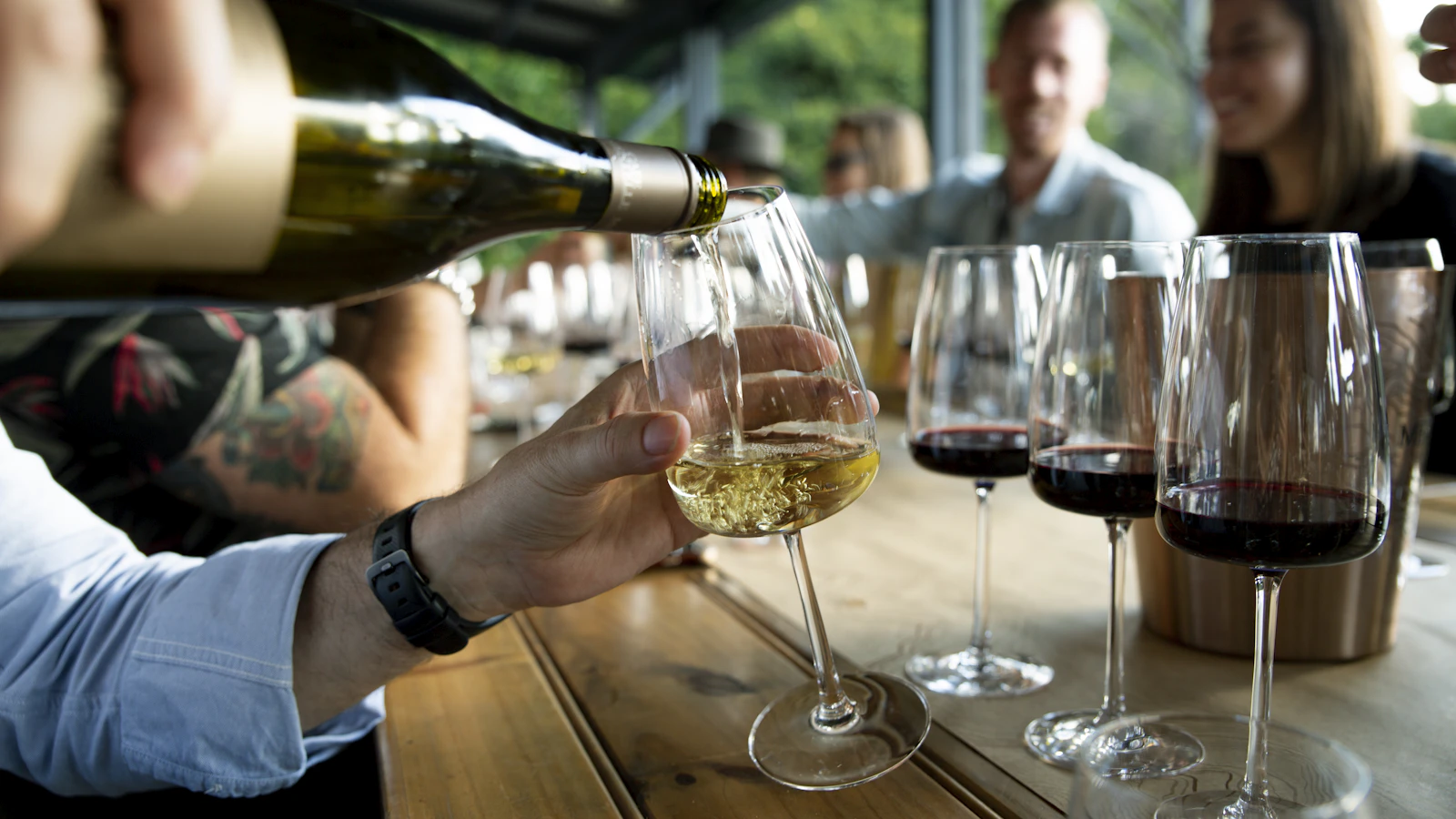
The challenge for wine schools is no longer just “getting known,” but capturing high-intent searches (career change, WSET, sommelier, food & wine pairing, oenology) and turning those visits into enrollments.
The winning combo in 2026: SEO + genuinely helpful content + pages that convert + well-governed AI. Here’s an actionable plan designed for a wine school (in-person, hybrid, or 100% online), with realistic, numbers-backed examples.
1) Start from search intent (not “showcase” keywords)
Many schools focus on 5–10 obvious queries: “wine school + city,” “oenology course,” “sommelier training.” Necessary—but not enough. Future students mostly type queries tied to a decision: duration, price, certification, outcomes, level, funding.
A simple intent map
- Discovery: “wine tasting course for beginners,” “learn wine online”
- Comparison: “WSET 2 or WSET 3,” “best sommelier course,” “wine training CPF”
- Decision: “WSET 2 price Paris,” “WSET level 3 duration,” “wine tasting course registration Lyon”
- Post-purchase (retention): “revise WSET 3,” “wine aroma sheets,” “tasting quiz”
Concrete actions (week 1)
- List 30 recurring questions you get by email/phone (the real objections).
- Turn them into SEO pages (guides + FAQ): 1 page = 1 strong intent.
- Prioritize “decision” pages (they convert better).
Realistic example: a school drawing 4,000 visits/month can often increase leads by +20 to +40% in 2–3 months simply by creating 8–12 pages that answer “price/duration/level/outcomes” intents.
2) Build 6 “money” pages that do the job (SEO + conversion)
SEO isn’t just a blog topic: your program pages must be the best answers in the SERP.
The 6 priority pages for a wine school
- “Flagship Program” page (e.g., WSET 2, WSET 3, internal certification)
- “Discovery Class” page (beginner tasting)
- “Career change / job” page (sommelier, wine merchant, sales)
- “Online” page (if you offer digital)
- “Funding” page (CPF, OPCO, payment plans)
- “Calendar / sessions” page (always up to date)
What wins rankings (and enrollments)
- A top summary block: duration, prerequisites, format, price, next dates.
- A scannable syllabus: objectives, skills, assessment.
- Proof: pass rate, average ratings, testimonials, partner companies.
- A targeted FAQ: “Is it accessible with no prior knowledge?”, “What’s the difference vs…?”, “Can I pay in 3 installments?”
- A clear (and repeated) CTA: “Request the syllabus,” “Book a call,” “Enroll.”
Benchmark (conversion):
- Optimized program page: 2–5% conversion from visit → lead (form / meeting sign-up)
- Non-optimized page: often <1%
At 2,000 visits/month on your program pages, moving from 0.8% to 2.5% = +34 leads/month. If 20% become enrolled students, that’s ~7 additional enrollments.
3) Use AI to produce more (without publishing “lukewarm” content)
AI is useful if you keep it to what it does well: structuring, rewriting, repurposing, consistency checks, speeding up production. It’s risky if you ask it “write me an article about wine” with no internal data.
An AI workflow tailored to wine schools
Step A — Internal inputs (non-negotiable)
- Your programs (objectives, modules, delivery)
- Your numbers (satisfaction rate, pass rate, alumni count)
- Your constraints (prereqs, calendar, locations)
- Your 20 frequent questions
Step B — Assisted production
- Generate 3 intent-led outlines (“WSET 2 price,” “WSET 2 vs 3”…)
- Draft a V1, then rewrite in the school’s voice
- Repurpose into: FAQ page, LinkedIn post, nurturing email, short video script
Step C — Quality control
- Fact-checking (dates, pricing, certification)
- Add internal examples (testimonials, real cases)
- E-E-A-T check: identified author, methodology, sources when needed
Realistic time savings:
- Without AI: 1 solid guide page = 6–8 hours
- With AI + a strong brief: 2.5–4 hours
Across 12 pieces/quarter, you save ~30 to 50 hours.
4) Win locally: local SEO + useful “city” pages (without duplication)
Wine schools often depend on a catchment area: Paris, Lyon, Bordeaux, Marseille, Brussels, Geneva… Local SEO brings highly qualified demand.
What works (and what gets penalized)
- ✅ One page per city if you have a real offering there (sessions, venue, instructors, calendar).
- ❌ Copy-pasting 15 “Oenology course + city” pages with three tweaked sentences.
A high-performing local page template
- “Oenology courses in Lyon: levels, dates, prices”
- Address/access + real photos of the venue
- Calendar of upcoming sessions in the city
- Reviews (Google/third-party) and testimonials from local students
- FAQ: parking, accessibility, language, duration
Benchmark: a well-made local page can aim for 100–400 visits/month in a major city, with a conversion rate often higher than blog content (intent is closer to enrollment).
Don’t forget
- Optimize and keep your Google Business Profile active (categories, posts, Q&A, photos, reviews)
- NAP consistency (Name/Address/Phone) across your site and directories
5) Measure what matters: visibility, leads, and “cost per enrollment”
Frustrating SEO is the kind that “drives traffic” without enrollments. Your dashboard must connect content → lead → enrollment.
Simple KPIs for a wine school
- Organic visits to program pages (not just the blog)
- Rankings and share of voice on 20 “decision” queries
- Conversion rate by page (visit → lead)
- Qualified leads (e.g., level, city, budget)
- Attributed enrollments (even with imperfect attribution)
Monthly routine (1h)
- Identify high-potential pages: high impressions, low CTR → rework title/meta.
- Identify pages to improve: traffic OK, conversion low → rework content + CTA + proof.
- Identify missing content: queries seen in Search Console with no dedicated page.
To quickly audit your presence and spot opportunities (queries, pages to create, visible competitors), use Visibility Check.
Numbers example (steering):
- You spend €2,000/month on content + optimization
- You generate 60 leads/month via SEO
- 12 enrollments/month attributed (20% conversion lead → enrolled)
→ SEO cost per enrollment = ~€167 (often very competitive vs ads).
Checklist: SEO + AI plan to fill your next sessions
- [ ] List 30 student/prospect questions (real objections)
- [ ] Create/optimize 6 “money” pages (programs, calendar, funding…)
- [ ] Write 8–12 “decision intent” pages (price, duration, levels, comparisons)
- [ ] Add a targeted FAQ to every program page
- [ ] Add proof: rates, reviews, student cases, identified instructors
- [ ] Build 3 strong local pages (priority cities), then expand
- [ ] Set up tracking: forms, phone clicks, appointment bookings
- [ ] Standardize an AI workflow (brief → V1 → fact-check → publish → repurpose)
- [ ] Run a monthly review: CTR, rankings, conversion, missing content
Conclusion
For a wine school, the most profitable SEO isn’t a “general wine blog.” It’s a cohesive system: impeccable program pages, content that answers decision-stage questions, clean local SEO, and pragmatic AI use to produce fast while staying specific, factual, and enrollment-driven.
In 90 days, a structured wine school can often gain: more visibility on the queries that matter, more qualified leads, and—most importantly—sessions that fill earlier, which also improves operational profitability (scheduling, instructors, rooms).
Frequently asked questions
Which SEO content drives the most enrollments for a wine school?
Decision-stage pages: price, duration, prerequisites, next dates, funding, comparisons (e.g., WSET 2 vs WSET 3), and local (city) pages. They usually convert better than “wine culture” articles.
How many pages do you need to create to see an SEO impact?
An effective foundation is often 6 “money” program pages + 8 to 12 intent-led guide pages. With serious on-page optimization, you can see first gains in 6 to 12 weeks depending on competition.
How can you use AI without lowering quality (or getting penalized)?
Use it as an accelerator, not a source: a brief based on your data (programs, numbers, FAQ), generate a V1, then fact-check and enrich it (proof, internal cases, instructors). The final content must be specific, verified, and genuinely useful.
How do you measure SEO ROI for a wine school?
Connect pages → leads → enrollments: track organic traffic on program pages, conversion rate by page, qualified leads, and attributed enrollments. Then calculate a cost per enrollment (SEO budget / SEO enrollments) to compare with ads.