Importers: How to Source Reliable New Wineries in 2026
In 2026, source reliable wineries with a clear method: multi-source pipeline, reliability scoring, document pack, pilot lots, and protective contract clauses.
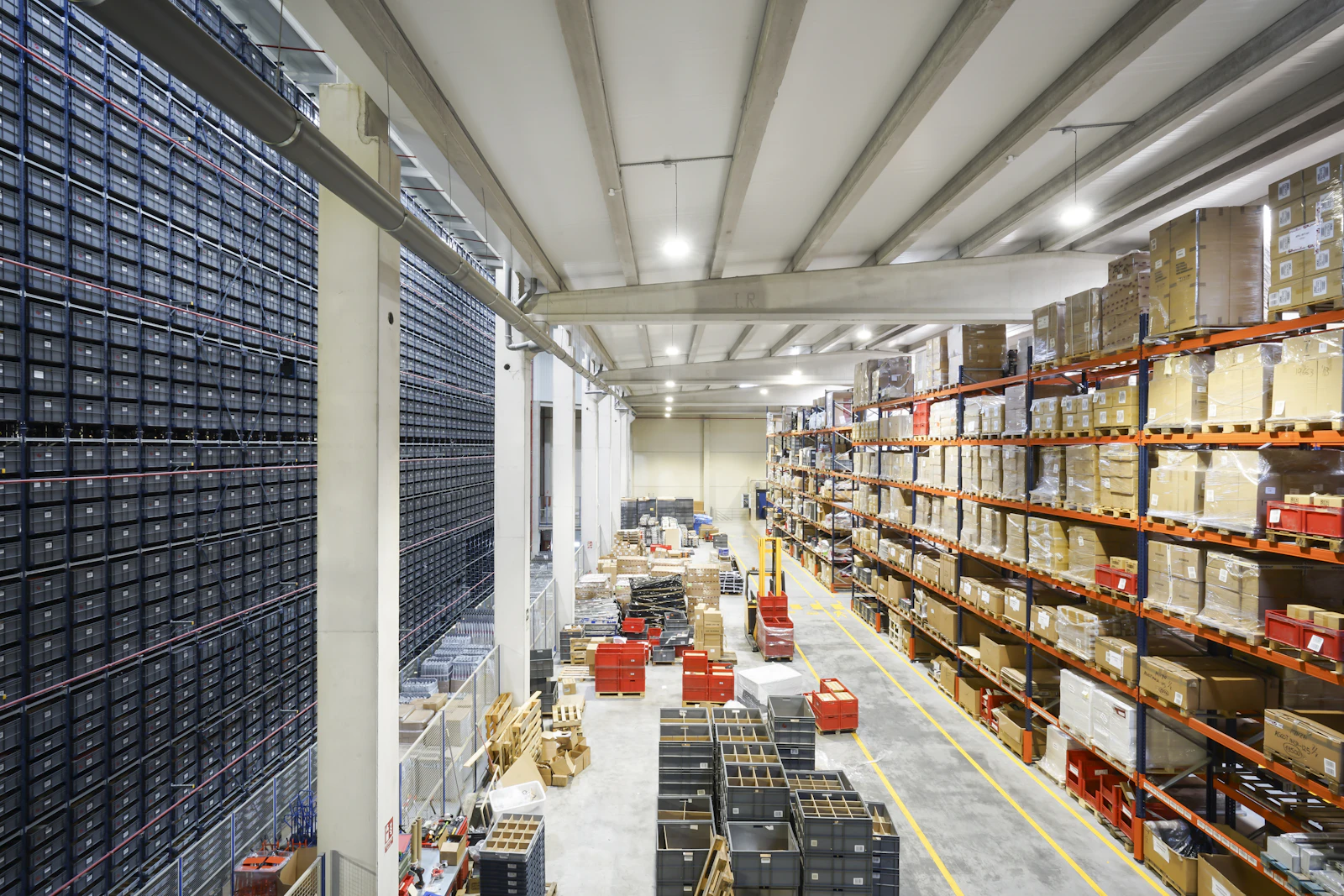
In 2026, sourcing a new winery is no longer just about trade fairs and “gut feel.” Between price volatility, climate uncertainty, traceability requirements, and more fragmented routes to market, an importer has to think like a B2B buyer: data, proof, tests, then phased commitment.
Here’s a simple, actionable method to find reliable new wineries, reduce risk (quality, logistics, compliance), and speed up time to market.
1) Build a multi-source sourcing funnel (and stop depending on a single trade show)
Goal: generate 30–60 qualified leads per quarter depending on your size, with a mix of “discovery” + “reliability.”
Effective sources in 2026:
- Field network: agents, consulting oenologists, dry-goods suppliers (glass, corks), carriers/forwarders. They see which wineries are serious (and which ones are “winging it”).
- Export track record: a winery already present in 2–4 countries with stable importers is often better structured.
- Public & trade data: registration, certifications, recalls/alerts, consistency of declared volumes vs. volumes offered.
- “Range gap” mapping: analyze your sales to identify where you’re missing offers (e.g., no premium white at 10–12€ ex-cellar, or no consistent “bistro” red at 4–5€).
Realistic example:
- You’re aiming for 12 newly listed wineries/year.
- Average market conversion rate (lead → listed): 10–15%.
- So you need 80–120 leads/year, i.e. 20–30 leads/quarter (minimum).
Operational tip: keep a single table (CRM or spreadsheet) with source, date, status, next step, risks. A clear pipeline is better than 200 business cards.
2) Set up a “winery reliability” score in 30 minutes (and stick to it)
Goal: decide quickly who deserves your time. A simple score prevents costly crushes.
Suggested grid (out of 100):
- Capacity & consistency (25 pts)
- volumes available across 2 vintages, allocation capability, history of stock-outs.
- Quality & consistency (25 pts)
- tastings across 2 lots/vintages, style/price consistency, stability after opening.
- Operational reliability (20 pts)
- response times, documents ready (FI/COA/technical sheets), shipping organization.
- Compliance & traceability (15 pts)
- analyses, allergens, declared oenological practices, certifications.
- Business alignment (15 pts)
- pricing policy, possible exclusivity, marketing (assets), channel fit.
Decision thresholds (practical):
- ≥ 80: “fast track” candidate (pilot lot + negotiation).
- 65–79: go deeper (light audit + test).
- < 65: stop or keep on watch.
Example:
- Winery A (organic, 60k bt/year): 83/100 → immediate test.
- Winery B (small, very good, but disorganized): 68/100 → test, but a more protective contract (clauses + conditional deposit).
Tip: set a communication SLA from the start (e.g., reply within 72h). Silence is a signal.
3) Qualify with proof: “document pack” + structured call + references
Goal: reduce nasty surprises (customs, labeling, shipping, volume).
Ask for a standard “document pack” before you even talk price:
- Technical sheet per cuvée (grape varieties, yield, total SO2, residual sugar)
- Recent analyses (alcohol, acidity, free/total SO2, VA, allergens)
- Certifications (organic, HVE, ISO, etc.) and validity date
- HD bottle/label photos + case/pallet dimensions
- Storage conditions and bottling date
- Proposed Incoterms + availability schedule
Structured call (20–30 min):
- Volumes per cuvée: “How many bottles are guaranteed within 90 days? And within 9 months?”
- Pricing policy: indexation, planned increases, consistency across markets
- Allocation management: who gets priority in a small harvest?
- Claims: breakage/returns rate, how it’s handled
References: require 2 importer contacts (even if not your country). One simple question:
- “Out of 10 shipments, how many arrive complete and on time?”
Realistic numbers:
- A labeling/customs block can tie up a lot for 2–6 weeks.
- Storage cost + commercial delays: often 0.20 to 0.60 € / bt (depending on volumes and penalties).
Requesting documents upfront pays for itself from the first incident avoided.
4) Test without trapping yourself: “pilot lot” protocol + go/no-go criteria
Goal: validate BOTH quality AND logistics execution before signing big.
Recommended protocol:
1) Blind samples (if possible) across 2 vintages or 2 bottlings.
2) Pilot lot: 1 mixed pallet or 600–1,200 bt (depending on your channels).
3) Go/no-go based on written criteria:
- label compliance (legal mentions, allergens, DDM if applicable)
- breakage < 1% on receipt
- on-time delivery (e.g., ± 5 days)
- organoleptic stability (J+7 test after opening on 3 bottles)
- dispute rate (target: 0)
Worked example:
- You’re considering 10,000 bt/year on one cuvée.
- Run a pilot at 1,200 bt. If it fails, you may lose 3,000–6,000 € of potential margin—but you avoid a 30,000–60,000 € problem (blockage, returns, brand damage, discounts).
Good habit: request a market back label from the test stage, not after. Labeling issues always show up “at the last minute.”
5) Secure the relationship: simple clauses, a timeline, and a weak-vintage plan B
Goal: turn a good winery into a reliable 3-year partner.
Useful clauses (simple, understandable):
- Product definition: cuvée code + vintage + packaging + alcohol tolerance (if legal)
- Quality & analyses: mandatory analyses per lot, thresholds (VA, SO2, etc.)
- Lead times & light penalties: progressive discount if there’s a significant delay
- Non-conformity handling: replacement, credit note, cost-sharing depending on cause
- Conditional exclusivity: exclusivity in the country if annual volumes are met (e.g., 6,000 bt/year)
- Increase policy: framing (e.g., max increase X%/year outside force majeure)
Plan B for a weak vintage:
- secure 2 “core” cuvées (stable volumes) + 1 “allocation” cuvée (rarer)
- include a substitution right (e.g., switch from vintage N to N+1, or a close cuvée) validated by tasting
To industrialize this process (scripts, follow-ups, sequences, documents), you can rely on Sales Activation to standardize your prospecting and conversion without lowering your standards.
2026 sourcing checklist (copy-paste)
- [ ] I’ve defined my target (region, ex-cellar price, volumes, channels) and my “range gaps”
- [ ] I have a pipeline of at least 20–30 leads/quarter
- [ ] Every winery goes through a /100 scoring (thresholds decided)
- [ ] I received the complete document pack before negotiating
- [ ] I ran a structured call (volumes, lead times, allocations, claims)
- [ ] I obtained 2 importer references and asked 3 factual questions
- [ ] I completed a pilot lot with written go/no-go criteria
- [ ] The contract covers: quality, lead times, non-conformities, increases, conditional exclusivity
- [ ] I have a plan B (substitution, core cuvées, alternative supplier)
Conclusion
In 2026, sourcing a reliable winery means applying purchasing discipline: a multi-source funnel, scoring, documented proof, lot testing, then pragmatic contracting. The goal isn’t to eliminate all risk (impossible), but to make it visible, measurable, and manageable. By standardizing these steps, you’ll sign fewer new wineries “on intuition”… and you’ll keep more of them over time, with volumes that grow vintage after vintage.
Frequently asked questions
How many wineries should I evaluate to sign one that’s truly reliable?
In practice, assume a 10 to 15% conversion rate between a “serious lead” and a listed winery. To sign 10 wineries/year, target 70 to 100 leads, with scoring and a pilot lot test to avoid false positives.
Which red flags should make me stop before going further?
Slow or vague replies, refusal to send analyses and technical sheets, inconsistency between stated volumes and real availability, unstable pricing policy, no claims procedure, or labels that can’t be validated quickly.
What order size works for a first test without taking too much risk?
A pilot lot of 600 to 1,200 bottles (often 1 mixed pallet) is a good compromise: enough to test logistics, compliance, and market feedback, without tying up too much cash or creating overstock.
How do I negotiate exclusivity without getting stuck if the winery doesn’t deliver?
Prefer conditional exclusivity: it activates if you reach an annual volume (e.g., 6,000 bottles) and if the winery meets lead times and quality. Add an exit clause in case of non-conformity or repeated stock-outs.